

Discount up to 30% for 2nd and 3rd Sibling. Free trial 3 days!

Learning Noorani Qaida UK to read the Quran starts with learning the Arabic letters, their sounds, and the basic rules of Quranic reading. Our Noorani Qaida Course helps children, adults, and beginners with expert UK tutors that build these skills step by step with live guidance from a top-rated Quran teachers.
Through our online Noorani Qaida classes, students learn how to recognize Arabic letters, pronounce them correctly, understand basic Harakaat, and practice the reading patterns used in the Holy Quran as an essential first step for Quran reading. The goal is simple: help every learner develop the foundation needed to read the Quran correctly and with confidence.Whether your child is starting from zero or you are an adult beginner who wants to learn Noorani Qaida online, our lessons provide a clear and supportive way to begin your Quran learning journey from home.
Start your Noorani Qaida learning journey today and take the first step toward confident Quran reading.
Noorani Qaida is a beginner-friendly method used to teach the basic skills needed for reading the Quran. It introduces learners to the Arabic alphabet, letter sounds, joined letters, vowel signs, and important reading rules before they move on to regular Quran recitation for all ages of learners in UK. Instead of asking a beginner to read complete Quranic verses immediately, the Qaida builds reading skills in a logical order. Students first learn individual Arabic letters and then gradually practice combinations, sounds, Arabic words, and Quranic reading patterns.This step-by-step approach makes Qaida Noorania useful for both children and adults who want to learn how to read Arabic and prepare for Quran recitation.
We offer Quran lessons 24/7 at every moment.
We are teaching Quran worldwide from 15 years.
We have alternative teachers in case one is absent.
We also provide certificates upn Quran course completion.
A strong beginning can make Quran learning easier. When students understand Arabic letters and learn their correct sounds first, they have a better foundation for reading Quranic words and verses.Our learn Noorani Qaida course focuses on the skills beginners need before moving into regular Quran reading. Students practice correct pronunciation, recognize different Arabic letter forms, and learn basic Tajweed rules in a gradual way.
The course can help learners:
The aim is not simply to complete the Qaida. The aim is to give students the reading foundation they can continue using when they begin reading the Holy Quran.

Learning the Quran is not a race. Some students understand a new concept quickly, while others need more repetition. A good learning process should allow room for both.Our approach focuses on three things: understanding, practice, and correction.
First, the teacher explains the new concept in simple language. Then the student practices it. Finally, the teacher listens and corrects pronunciation or reading mistakes.This cycle is repeated throughout the course so that students do not simply memorize patterns. They learn how to use their reading skills.
We are offering the individual classes in brother to brother and sister to sister, with one-on-one learning mechanism.
Another advantage of studying the Quran online is the affordable prices we offer.
We strive hard to hire expert Arab and non-Arab, male and female Quran teachers from Egypt, Jordan and Pakistan.
Children often need more repetition, encouragement, and patient guidance when they are learning something new. Our Noorani Qaida for kids lessons are tailored to keep the learning process simple and focused.
A teacher can listen to the child’s pronunciation, identify mistakes, explain the correct sound, and give the child time to practice. This personal attention can be especially helpful when a learner is trying to distinguish between similar Arabic letters.
The course is also suitable for adult beginners. You do not need previous Arabic knowledge to begin. If you have always wanted to learn the Quran but never learned the basic reading skills, Noorani Qaida can give you a practical starting point.
Our lessons move from simple concepts to more advanced reading practice. The exact pace can vary from one learner to another, but the learning path commonly includes the following areas.
Students begin by learning the Arabic alphabet and recognizing individual Arabic letters. They learn the shape and sound of each letter and practice saying it clearly.
This stage is important because accurate letter recognition supports everything that comes later in Quran reading.
Arabic letters can appear in different forms when they are used within words. Students learn how letters connect and how their shapes may change when they appear at the beginning, middle, or end of a word.
This helps beginners move from reading separate letters to reading connected Arabic text.
Students learn the basic movement signs, including Fatha, Kasra, and Dammah. These signs help learners understand how Arabic letters are pronounced when reading.
Regular practice helps students connect the letter, its vowel sign, and its sound.
Students learn Tanween and practice reading its different forms. These exercises help beginners become familiar with common Quranic reading patterns.
Sukoon is introduced through simple examples and guided practice. Students learn how a letter without a vowel sound is read and how it works with the letters around it.
Students learn how Shaddah affects pronunciation and how doubled letters are read. Repeated practice helps learners pronounce these sounds more naturally during Quran reading.
Students are introduced to the basic concept of lengthening sounds and learn how Madd and Leen appear in Quranic reading.
As students progress, they begin learning foundational rules of Tajweed that support accurate Quran recitation. These rules are introduced according to the learner’s level rather than being presented all at once.
The final goal of the exercises is practical reading. Students gradually move from individual letters and patterns to Arabic words and Quranic examples.
This prepares them to move from the Qaida toward reading the Quran with greater confidence.
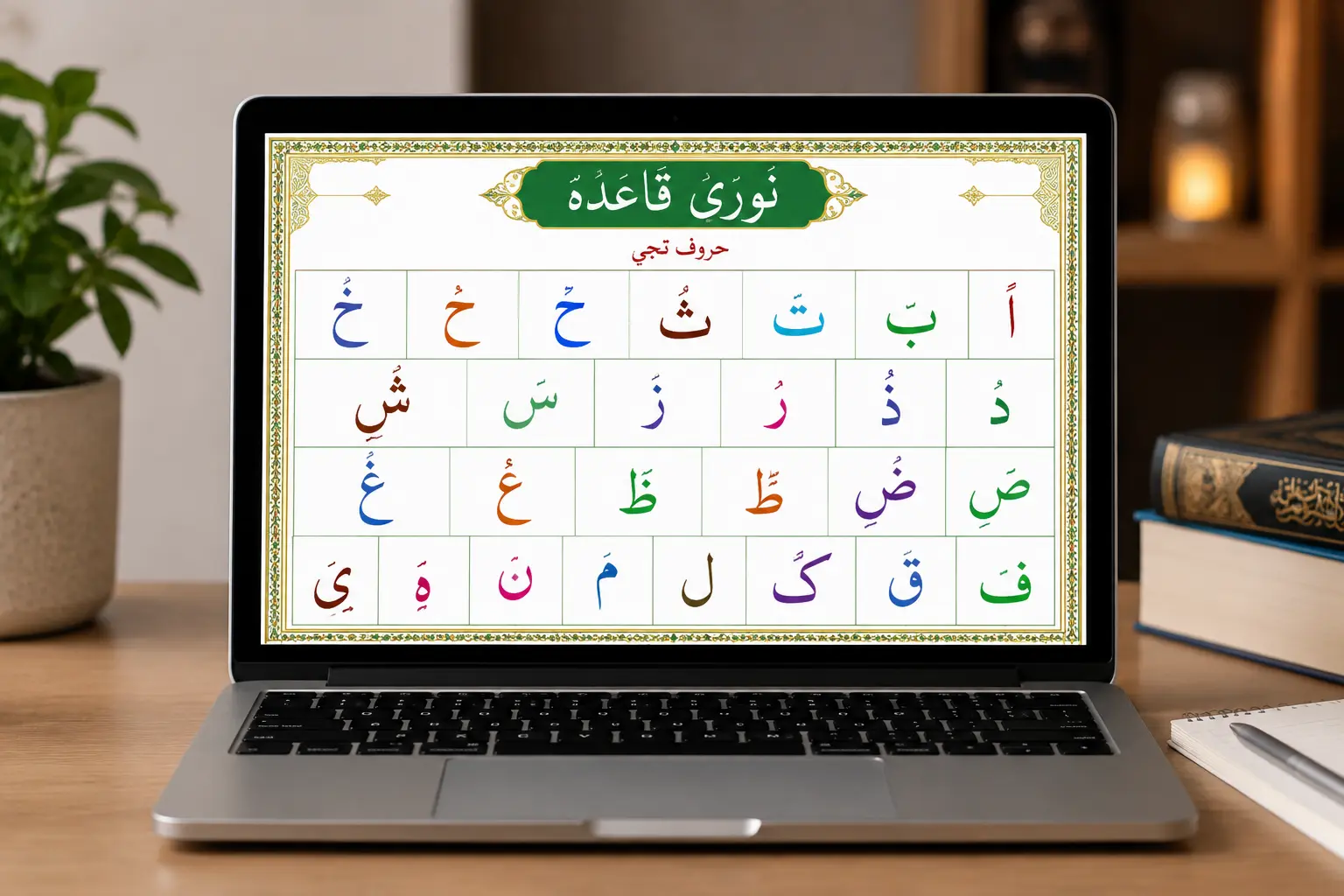
Every learner progresses differently, so we focus on understanding rather than simply rushing through pages. Lessons can include:
Lesson 1: Arabic Letters
Students become familiar with the Arabic alphabet and practice recognizing and pronouncing individual letters.
Lesson 2: Joined Arabic Letters
Students learn how letters connect and how connected forms are read.
Lesson 3: Letter Sounds and Reading Practice
Students strengthen their recognition skills through guided pronunciation and repetition.
Lesson 4: Harakaat
Students learn basic vowel signs and practice reading letters with different movements.
Lesson 5: Tanween
Students learn the sounds and reading patterns associated with Tanween.
Lesson 6: Harakaat and Tanween Exercises
Students apply what they have learned through structured reading exercises.
Lesson 7: Extended Vowel Signs
Students learn additional vowel patterns used in Arabic and Quranic reading.
Lesson 8: Madd and Leen
Students practice lengthened sounds and learn how they affect recitation.
Lesson 9: Combined Reading Practice
Students bring different concepts together through more advanced exercises.
Lesson 10: Sukoon
Students learn how to read letters with Sukoon and practice the related patterns.
Lesson 11: Sukoon Exercises
Students strengthen their reading through repeated practice.
Lesson 12: Shaddah
Students learn the correct pronunciation of letters with Shaddah.
Lesson 13: Shaddah Practice
Students apply Shaddah through guided exercises.
Lesson 14: Combined Tajweed Practice
Students practice multiple reading rules together.
Lesson 15: Advanced Qaida Exercises
Students work on more challenging reading combinations and improve fluency.
Lesson 16: Preparation for Quran Reading
Students bring their learned skills together and prepare to move toward regular Quran reading.
The lesson sequence can be adjusted according to the student’s reading ability, age, pronunciation, and learning speed.
Choosing a Quran learning programme is an important decision for parents and beginners. You need a course that is clear, flexible, and focused on real learning rather than simply completing lessons.
Our approach focuses on the learner’s foundation.
Students learn directly with an online tutor who can observe their reading and correct mistakes during the lesson.
You do not need to know Arabic before starting. The course begins with the basics and gradually develops reading skills.
The purpose of the Qaida is to prepare students for reading the Quran. Lessons connect basic Arabic reading skills with practical Quranic reading.
Students are introduced to important Tajweed and Arabic reading principles as they progress through the course.
Students can learn from home through online classes, making Quran education easier to fit around school, work, and family routines.
The course can support young learners, teenagers, and adults who want to start or improve their Quran reading skills.
There is no single completion time that applies to every learner.
A child’s age, previous exposure to Arabic, class frequency, practice routine, pronunciation, and learning speed can all affect progress.
Some students may move through the lessons quickly, while others benefit from additional practice. Rather than promising an unrealistic fixed time, we focus on helping students understand each stage before moving forward.
Regular Noorani Qaida exercises and consistent lessons can help learners build stronger reading skills.
Completing Noorani Qaida is not the end of Quran learning. It is the foundation for the next stage.
After completing the basic Qaida skills, students can move toward reading the Quran with rules of Tajweed. They begin applying the reading principles they learned in Qaida to real Quranic verses.
A learner’s journey may continue from:
Noorani Qaida → Quran Reading → Quran With Tajweed → Improved Recitation
Students who want to continue further may also choose other areas of Quran learning according to their goals.
Our online Noorani Qaida course is suitable for:
Children who are starting Quran reading.
Adults who never learned Arabic reading.
Beginners with little or no Arabic knowledge.
Students who want to improve their pronunciation.
Learners who want to prepare for Quran reading.
Students who want to strengthen their basic Tajweed skills.
Families looking for private Quran classes from home.
Certified and experienced Quran teachers dedicated to quality Islamic education.
Stay informed with detailed monthly reports tracking your child’s Quran learning journey.
At the end of month the progress report of Quran lesson class in pdf is sent to parents.
Qualified female tutors available for sisters and young girls, ensuring comfort and privacy.
Online learning gives students the opportunity to study Quran reading from home with a dedicated teacher.Instead of travelling to a physical classroom, students can join their lesson from a computer, tablet, or suitable device. This can be especially useful for families with busy schedules for Islamic studies.The main benefit, however, is not simply convenience. The real value comes from having structured lessons, teacher guidance, pronunciation correction, and regular practice. Read more about Noorani Qaida.
Ready to build a strong foundation for Quran reading? Al Huda Quran Academy provides live online Noorani Qaida classes for kids, adults, and beginners in UK to recite the Quran fluently and accurately. Learn Arabic letters, correct pronunciation, basic Tajweed rules, and Quran reading step by step with the guidance of a dedicated Quran teacher.Whether you are starting from the beginning or want to improve your reading skills, our online lessons are designed to make Quran learning simple, supportive, and comfortable from home.Join Al Huda Quran Academy today and start learning Noorani Qaida with confidence.
Yes. You can learn Noorani Qaida online through live lessons with a Quran teacher. Online learning allows students to practice from home while receiving direct guidance and pronunciation correction.
Yes. Noorani Qaida for kids is a common starting point for children who are learning to read Arabic and the Quran. Lessons can be adapted to the child’s age, attention span, and learning speed.
Absolutely. Adult beginners can start from the Arabic alphabet and progress step by step. Previous Arabic knowledge is not required for a beginner-level course.
The lessons give students repeated practice with Arabic letters, sounds, vowel signs, and reading combinations. A teacher can listen to the student’s recitation and correct pronunciation during practice.
Yes. Online classes allow children to learn from home with a private Quran teacher. Parents can choose a schedule that works with the child’s school and family routine.